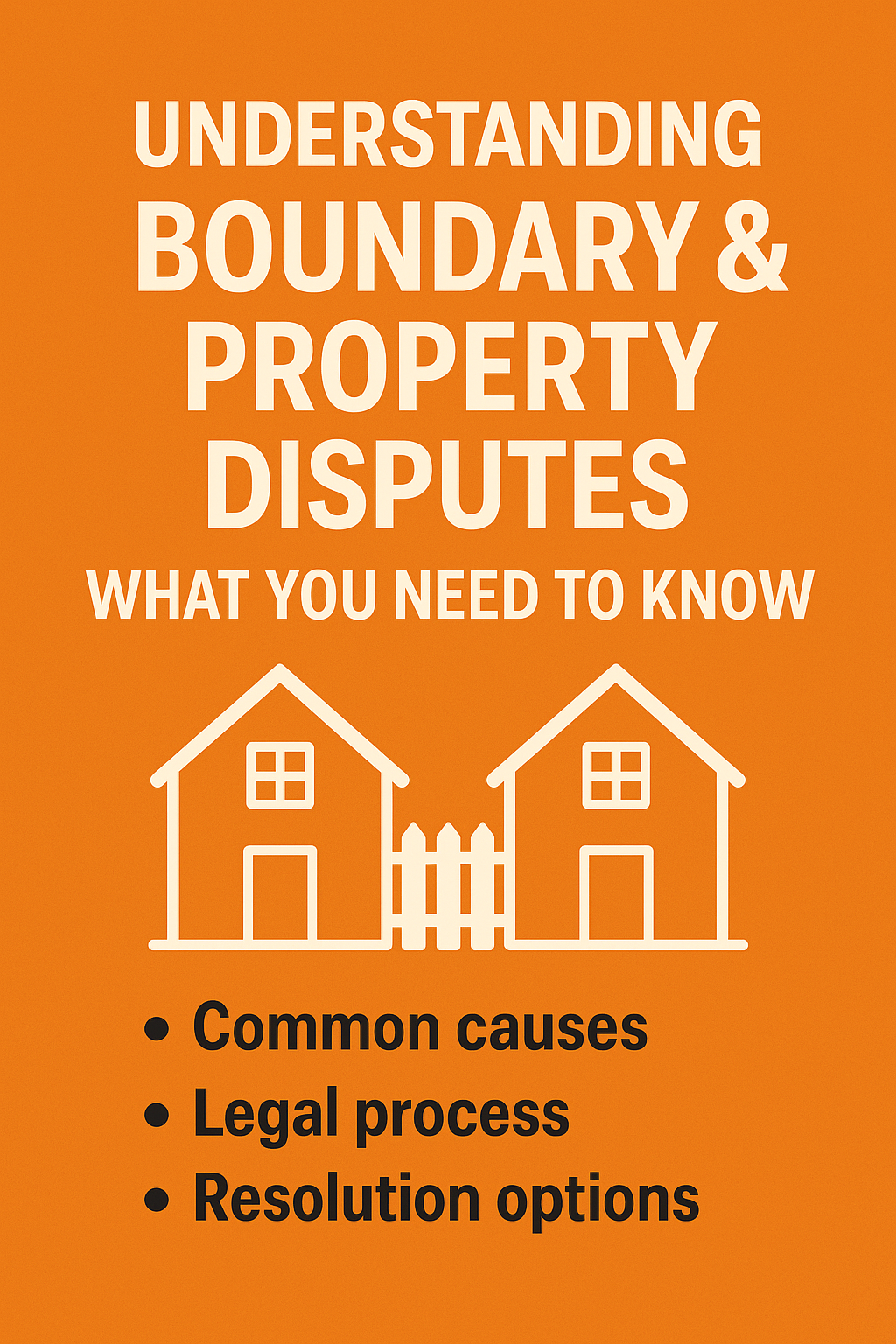
Boundary disputes and property disagreements are surprisingly common, especially in crowded urban or semi-urban districts. Whether you’re dealing with fences, hedges, or rights of way, a misunderstanding or a poorly documented boundary can spiral into costly legal battles. Below is what you need to know — and how Berwicks Solicitors can help.
1. Why Boundary Disputes Happen
Common causes include:
- Poorly drawn or unclear title deeds
- Neighbor alterations or encroachments (like building over a line)
- Difference in interpretation (e.g. who owns a driveway)
- Overgrown hedges, fences, or trees shifting the perceived boundary
Often disputes start as small tensions but escalate when communication breaks down.
2. The Legal Tools at Your Disposal
Some of the legal concepts and tools used include:
- Title Plans & Deeds — what the official documents actually state
- Adverse Possession — when someone occupies land long enough under certain conditions
- Rights of Way / Easements — legal access or passage rights
- Injunctions — court orders to stop work or remove encroachments
- Surveyor Reports — objective measuring evidence used in disputes
A skilled solicitor can interpret deeds, commission expert evidence, and negotiate or litigate as needed.
3. Steps You Can Take Before Escalating
Before launching a full legal challenge:
- Speak with your neighbour — sometimes misunderstandings can be resolved amicably.
- Review your deeds and property plans.
- Document clearly (photos, measurements, dates) where encroachment is happening.
- Consult a surveyor or land expert for precise measurements.
These early steps often allow resolution without court intervention.
4. How Berwicks Solicitors Can Help
With over 15 years’ experience in property and boundary law, we provide:
- Detailed review and interpretation of title deeds
- Coaching on how to communicate legally and diplomatically with neighbours
- Liaison with surveyors, land registry experts, and barristers
- Formal legal letters, mediation, or court proceedings if needed
We aim to resolve with minimum stress — but we’re always ready to fight for what’s right.
5. When to Get Legal Advice Early
If:
- Your neighbour is building or altering a structure over the perceived line
- An injunction or court order has been threatened
- You’re unsure of your rights or boundary lines
- Costs to your property value are significant
Don’t delay — early advice often avoids costly escalation.